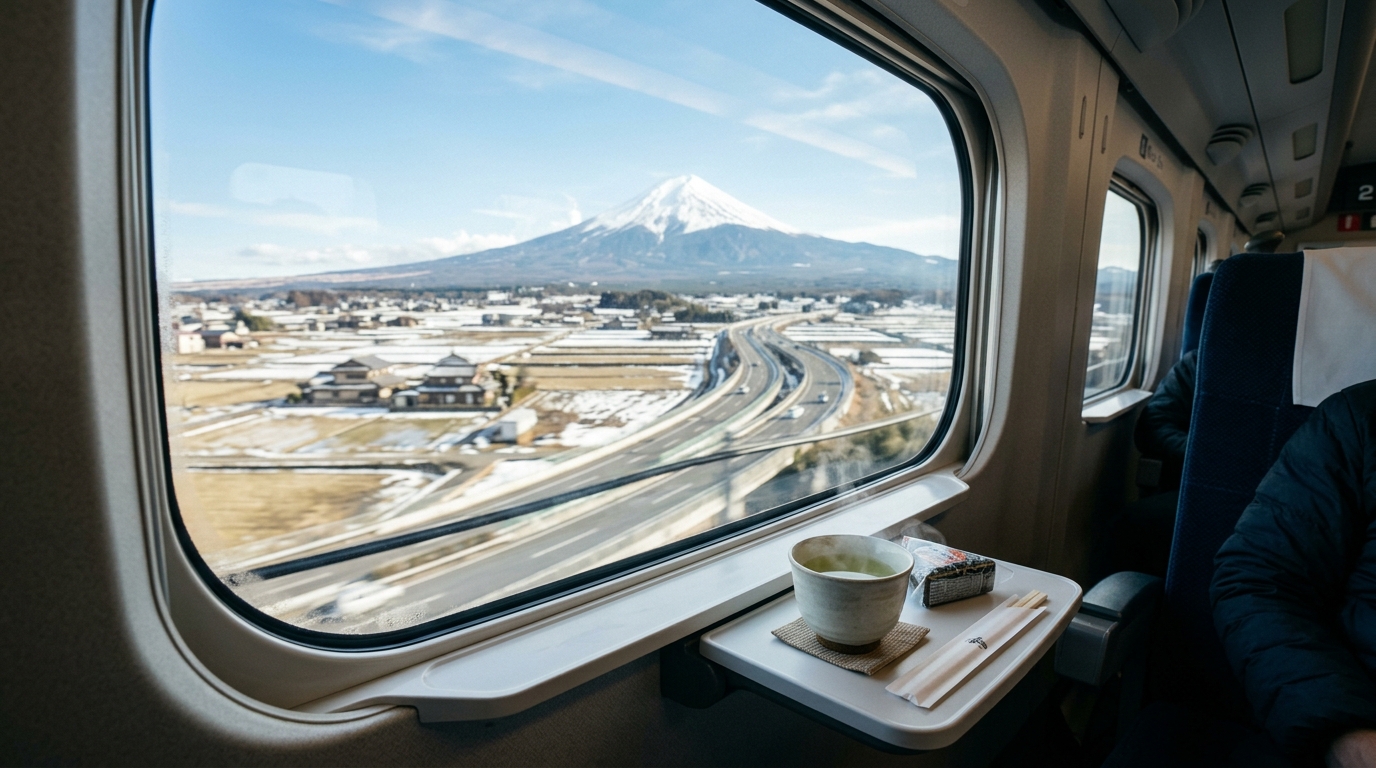
Shinkansen Fare Breakdown: Base vs Express Charges [2026]
![Shinkansen Fare Breakdown: Base vs Express Charges [2026]](https://static.trainbook.online/images/articles/cover-1774027506096.png)
Key Takeaway: Understanding the Shinkansen fare breakdown is essential for any traveler. A standard Tokyo to Kyoto journey costs ¥14,170 total. This splits into a base fare of ¥8,360 and a limited express charge of ¥5,810. You need both to ride the bullet train, so book complete Shinkansen tickets online to avoid ticket gate errors.
You stare at the ticket machine. The screen flashes two different prices for the exact same seat, confusing tourists and locals alike. Panic sets in immediately. Understanding the Shinkansen fare breakdown: base fare vs limited express charges feels like cracking a secret code. But it is actually simple. Japanese rail operators divide the total cost into a basic distance fee and a high-speed premium. This two-part system is the backbone of traveling at speeds up to 320 km/h (199 mph) across the country.
Quick Overview: The Shinkansen Fare Breakdown Explained
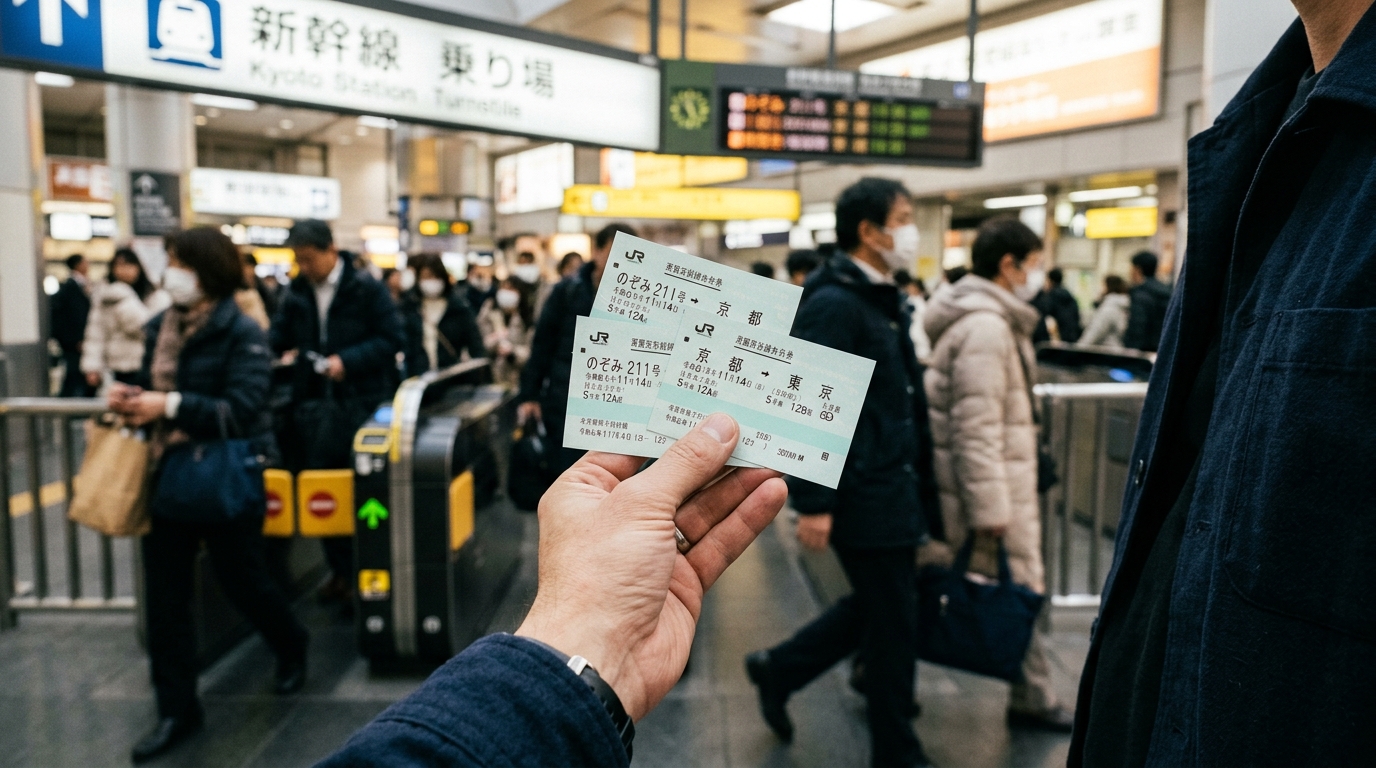
Most travelers get stuck at the automated gates because they do not fully grasp the Shinkansen fare breakdown. They insert just one ticket, only to hear a loud buzzer and see flashing red lights. You need both components to ride.
- Base Fare (Joshaken): The basic cost to travel the physical distance between two cities.
- Limited Express Charge (Tokkyuken): The premium fee required to board the high-speed bullet train.
- Seat Reservation (Shiteiseki): An optional add-on built into the express charge for guaranteed seating.
Buying tickets individually is confusing. You can skip the station math entirely when you purchase your Shinkansen tickets through a unified booking platform.
Physical vs. Digital: What to Expect at the Gate
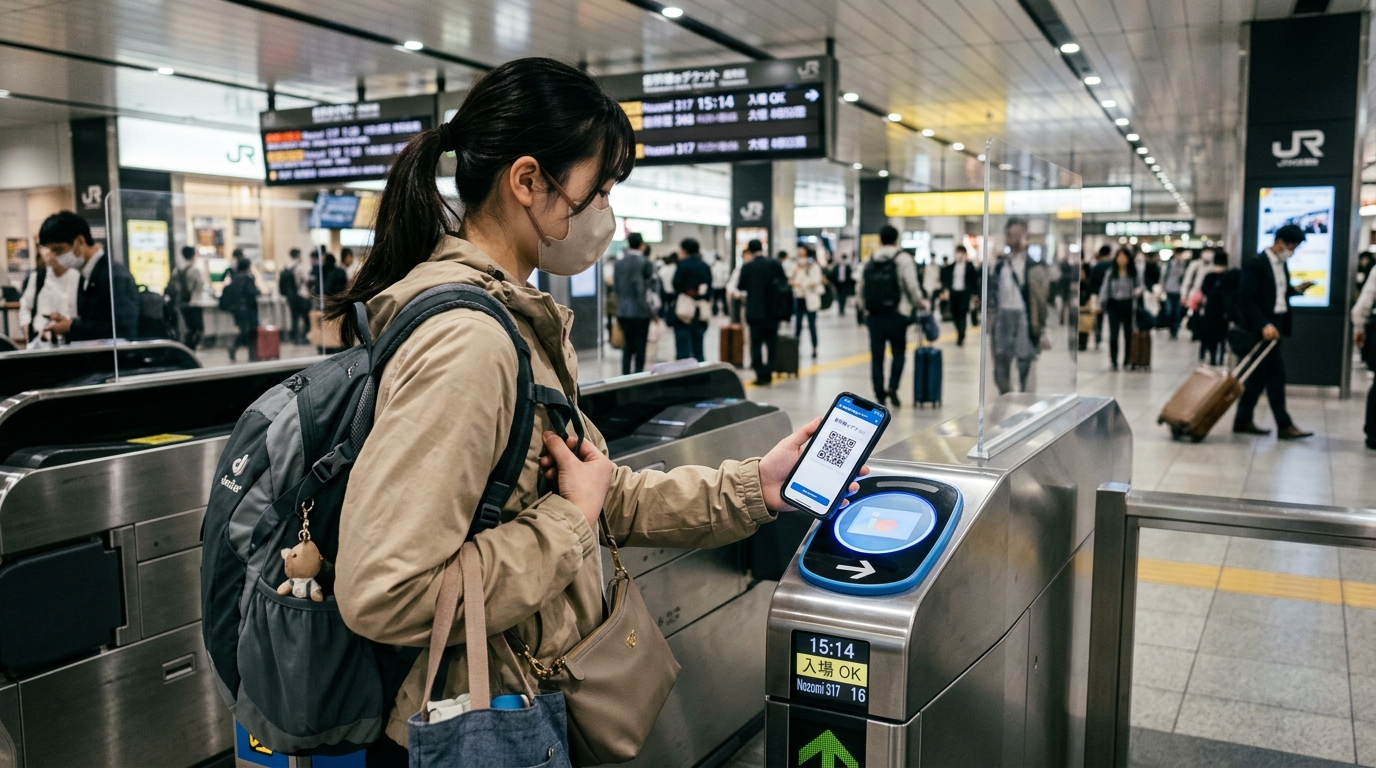
Historically, the Shinkansen system relied heavily on small, magnetic paper tickets. If you buy at the station, you will likely receive two separate paper rectangles. You must stack these perfectly on top of one another and insert them into the gate slot simultaneously. It requires a bit of practice. Looking toward 2026, Japan Railways is heavily pushing digital QR codes and IC card integration. Digital tickets bundle the base and express charges into one seamless scan, heavily reducing the chance of losing half your fare in your pocket.
What Exactly is the Base Fare (Joshaken)?
Think of it as your entry fee. The base fare is your right to travel from point A to point B on Japan's railway network, regardless of the train speed. The Shinkansen fare breakdown always begins with this foundational Joshaken. It covers the exact mileage. If you wanted to spend nine hours riding slow local commuter trains from Tokyo to Osaka, this ticket covers you. Nobody actually does that. But the base fare remains the foundational building block of your journey's total cost.
Prices scale predictably with distance. A base fare ticket remains valid for multiple days on long routes, allowing stopovers along the way. You can hop off. According to JR East, base fare tickets covering over 600 kilometers remain valid for four full days. That offers incredible flexibility.
The Hidden Power of the Base Fare Stopover
Savvy travelers use the base fare rules to their advantage. Let us say you are traveling from Tokyo to Hiroshima in 2026. The straight distance is roughly 894 kilometers. Because this exceeds the 600-kilometer threshold, your base ticket is valid for several days. You can legally exit the station in Kyoto, spend the night, and resume your journey to Hiroshima the next day using the exact same base fare ticket. You will only need to purchase a new limited express ticket for the second leg. However, calculating this at a kiosk is notoriously difficult. If you want a smooth, stress-free itinerary, book your point-to-point Shinkansen routes online.
Why Pay the Limited Express Charge (Tokkyuken)?
Speed costs extra in Japan. You pay the limited express charge specifically for the high-speed privilege of riding the Shinkansen, saving you hours of travel time. This part of the Shinkansen fare breakdown covers the high-speed privilege and actually gets you onto the bullet train platform. Without it, the station guards will politely turn you around at the secondary Shinkansen gates. It acts as your VIP pass.
This charge fluctuates based on your comfort preferences. Riding in an unreserved car costs slightly less than booking a specific reserved seat. Taking the Green Car costs more. Let us look at how these fees combine for a standard journey in 2026.
| Ticket Component | Cost (JPY) | What It Covers | Action |
|---|---|---|---|
| Base Fare | ¥8,360 | Distance traveled (513 km) | Book full route |
| Limited Express Charge | ¥5,810 | High-speed train access | |
| Total Price | ¥14,170 | Complete journey |
Station kiosks print these separately. You will often receive two physical paper tickets that you must stack together at the gate. It feels terribly old-fashioned. To avoid carrying multiple loose tickets, book train tickets online and receive a single, streamlined digital QR code instead.
Train Types: Nozomi, Hikari, and Kodama
When looking at a Shinkansen fare breakdown, the specific train model matters. Your express charge also depends slightly on which train you board. On the popular Tokaido Shinkansen line (connecting Tokyo, Kyoto, and Osaka), there are three main train types. The Nozomi is the fastest, making the fewest stops. It covers the Tokyo to Osaka route in just 2 hours and 21 minutes. Because of this speed, the Nozomi carries a small premium surcharge—usually around ¥320 to ¥420 extra on the limited express fee. The Hikari and Kodama are slightly slower, making more stops, and therefore do not carry this extra Nozomi premium.
| Train Type | Duration | Stops | Express Surcharge |
|---|---|---|---|
| Nozomi | 2h 21m | Fewest | Included (Premium) |
| Hikari | 2h 54m | Moderate | Standard |
| Kodama | 3h 54m | Every Station | Standard |
How Do Seat Types Change the Express Charge?
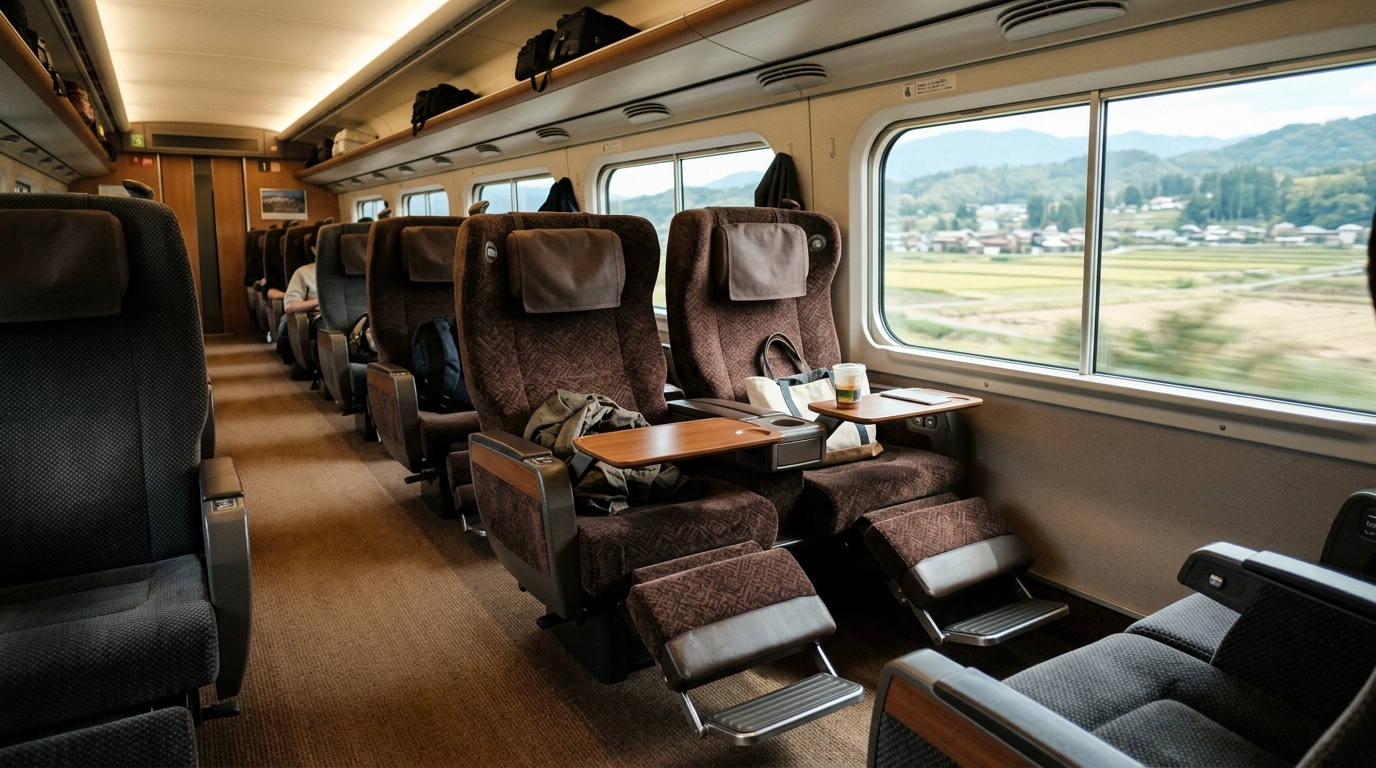
Your seat choice alters the final price. Your choice of carriage significantly impacts the Shinkansen ticket fare breakdown. Opting for an unreserved seat saves you about ¥530 on your limited express charge, but you risk standing in the aisles during peak hours. The base fare never changes. Only the limited express portion shifts when you upgrade your travel class or secure a specific window seat. It pays to understand the tiers.
Green Cars demand a significant premium. These first-class carriages offer wider seats, better recline, and a quieter atmosphere for weary travelers. Gran Class is even fancier. Available on select northern routes, this ultra-premium tier includes dedicated attendants and complimentary food and beverage service.
Don't Forget Oversized Baggage Rules
If you are traveling with large suitcases (dimensions between 160cm and 250cm), you must reserve a specific "Oversized Baggage Seat." These are the last row of seats in a train car, allowing you to store your luggage securely behind your chair. Reserving these seats does not cost extra on top of your standard reserved express charge. However, if you board with oversized baggage without this specific reservation, conductors will charge you a ¥1,000 penalty fee on the spot. Save yourself the embarrassment and secure an oversized baggage seat online well before your departure.
| Seat Class | Base Fare | Express Charge | Total Cost | Booking Link |
|---|---|---|---|---|
| Unreserved | ¥8,910 | ¥4,960 | ¥13,870 | Check prices |
| Reserved (Standard) | ¥8,910 | ¥5,810 | ¥14,720 | Check prices |
| Green Car (First Class) | ¥8,910 | ¥10,680 | ¥19,590 | Check prices |
Prices peak during major Japanese holidays. Golden Week and the New Year period see slight surcharges applied to all reserved seat express tickets. Plan ahead carefully. You can secure your preferred seats early if you check latest prices on shinkansentickets.net well before your planned departure date.
How Do Children's Fares Work in the Shinkansen Fare Breakdown?
Families traveling together need to know how age affects the Shinkansen fare breakdown. Children aged 6 to 11 pay exactly half the adult base fare and half the adult limited express charge. This 50% discount applies to both unreserved and standard reserved seats. However, if you book a Green Car seat for a child, the Green Car premium fee remains at the full adult price, even though the base and express portions are halved.
Infants and toddlers under 6 travel for free if they sit on your lap. If you want a dedicated seat for your toddler, you must pay the standard child fare. Traveling families should note that peak 2026 school holiday periods will make unreserved cars incredibly chaotic. Booking family seating together can be stressful at the station, so reserve your family's Shinkansen tickets online to guarantee seats next to each other.
Peak, Regular, and Off-Peak Shinkansen Fare Breakdown Surcharges
The limited express charge is not completely static. Japan Railways adjusts the reserved seat fee based on the calendar. During peak seasons like Golden Week (late April to early May), Obon (mid-August), and New Year, the express charge increases by ¥200 to ¥400. Conversely, traveling during off-peak periods in late winter or early autumn reduces the express charge by ¥200.
Looking ahead to 2026, you can expect the Golden Week surcharge to hit its maximum around May 2nd through May 6th. These minor fluctuations only apply to reserved seats. Unreserved seat prices remain identical 365 days a year. If you want to lock in your travel budget early, book your tickets in advance to secure your itinerary without worrying about last-minute seasonal price hikes.
Can You Use Suica for the Base Fare?
Smart cards complicate things slightly. Even if you use a digital card, the Shinkansen fare breakdown rules still apply. Smart transit cards like Suica cover your base fare automatically, but you must still purchase a separate limited express ticket for the bullet train. Tapping your card at the Shinkansen gate without that secondary express ticket triggers an immediate error alarm. It happens to everyone once. According to JR Central, you must link your IC card to a digital reservation beforehand.
Crossing Regional Boundaries
There is another major catch with using IC cards for your base fare. Suica, Pasmo, and ICOCA cards generally cannot cross regional Japan Railway boundaries. For instance, you cannot simply tap a Suica in Tokyo (JR East territory) and tap out in Kyoto (JR Central territory). The system will lock your card. Tourists often find this linking process frustrating. The official apps require specific credit cards and navigating poorly translated Japanese menus on your smartphone. Skip the headache entirely. Just book your complete Shinkansen tickets online to make sure both your base and express fares are properly bundled.
7 Pro Tips for Managing your Shinkansen Fare Breakdown
- Stack your tickets: If the machine gives you two physical tickets (base and express), insert both simultaneously into the automated gate slot.
- Utilize the stopover rule: Base fare tickets for journeys over 100 kilometers allow you to exit intermediate stations, provided you do not backtrack.
- Watch the calendar: Reserved seat express charges fluctuate by ¥200 to ¥400 depending on whether you travel during peak, regular, or off-peak 2026 and 2026 seasons.
- Keep tickets until the end: You must insert your tickets into the exit gates at your final destination, so never throw them away on the train.
- Reserve luggage space early: Express charges do not increase for oversized baggage seats, but the limited inventory sells out days in advance.
- Beware the Nozomi premium: The fastest train requires a slightly higher express charge. If you are on a tight budget, the Hikari train saves you a few hundred yen.
- Bundle for simplicity: Avoid the split-ticket confusion entirely by using a unified booking platform to secure your seats in one simple transaction.
Frequently Asked Questions
What is the difference between base fare and limited express charge in a Shinkansen fare breakdown?
The base fare (Joshaken) covers the basic distance traveled, while the limited express charge (Tokkyuken) is the premium fee required specifically for high-speed Shinkansen travel.
Do I need two tickets for the Shinkansen?
Yes, a standard Shinkansen journey requires both a base fare ticket and a limited express ticket, though these are often combined into a single physical ticket when purchased together.
How much is a Shinkansen ticket from Tokyo to Kyoto?
A standard one-way Shinkansen ticket from Tokyo to Kyoto costs approximately ¥14,170. What is the Shinkansen fare breakdown for this route? It includes a ¥8,360 base fare and a ¥5,810 limited express charge.
Can I use only a base fare ticket on the Shinkansen?
No, you cannot board a Shinkansen with only a base fare ticket; you must also pay the limited express charge. Understanding the fare breakdown for Shinkansen helps avoid this gate error.
What is a Joshaken ticket?
A Joshaken is a basic fare ticket that covers the cost of transportation between two stations on the Japan Rail network regardless of the train type used.
Is the limited express charge mandatory for bullet trains?
Yes, the limited express charge is a mandatory fee for all passengers using Shinkansen services as it covers the premium for speed and specialized infrastructure.
Does the Nozomi train cost more?
Yes. Because the Nozomi is the fastest train on the Tokaido line, its limited express charge includes a small surcharge compared to the slower Hikari and Kodama trains.
![How to Pick Up Shinkansen Tickets: Skip 45-Min Lines [2026]](https://static.trainbook.online/images/articles/cover-1774027511628.png)
![Shinkansen Family Tickets & Group Booking: How to Sit Together [2026]](https://static.trainbook.online/images/articles/cover-1774028141349.png)